What Really Happens After You Apply for a Job? From Application to Interview
You hit submit, the confirmation page says "Application Received," and then... nothing. Days pass, sometimes weeks, and the silence can feel like the application simply vanished into a black hole. It didn't. Behind that quiet status bar, your resume is moving through a fairly predictable sequence of automated filters, human reviews, and internal scheduling delays. What happens after you submit a job application is rarely random, even when it feels that way from the outside, and knowing the actual sequence makes the wait easier to sit through. It also helps you decide when it's genuinely worth following up versus when it's simply too early to expect an answer.
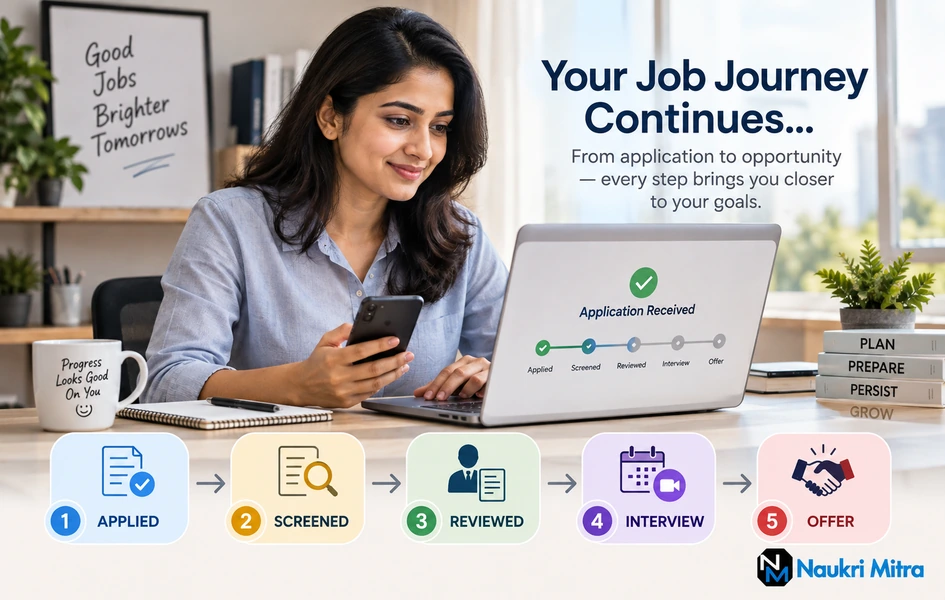
The Hiring Process Timeline: What Happens After You Click Apply
Most corporate hiring follows a rough hiring process timeline from resume submission to interview that looks something like this: automated screening, recruiter review, hiring manager shortlist, a phone or video screen, one or more interview rounds, and finally an offer. On paper it sounds linear, but in practice each stage has its own queue, and your application can sit waiting simply because someone hasn't gotten to it yet, not because anything is wrong with your profile.
What has genuinely changed in the last few years is the number of rounds. Where two or three interview stages used to be typical, candidates in 2026 commonly report five to eight rounds before an offer, largely because employers are trying to reduce hiring mistakes by involving more people in the decision.
What Actually Happens the Moment You Hit Submit
The instant your resume lands in the system, it rarely goes to a person first. An Applicant Tracking System scans it for basic parsing quality, keyword and skill overlap with the job description, and formatting issues. Industry data suggests that by the end of 2025, roughly 83% of companies were using some form of AI in this first pass, and a resume that fails basic parsing can be auto-rejected in well under a second, before a human ever opens it. Estimates suggest around three-quarters of applications never reach a human reviewer at all — they are filtered out at this automated stage. This is different from a human recruiter review, which happens later and judges tone, relevance, and context in a way software still cannot.
How Long Does It Actually Take to Hear Back?
There is no fixed answer to how long does it take to hear back after applying for a job, but the averages are useful context. Across industries, average time-to-hire runs around 41 to 44 days from application to accepted offer, and specialised or senior roles frequently take 60 days or more. That number covers the entire process, not just the first response, so a two-to-three-week silence before any update is well within normal range rather than a sign of rejection.
Separate research tracking recruiter-candidate conversations found that a large share — over 70% in one large dataset — go more than 30 days without any follow-up message at all, with a median silence period stretching past two months. The honest takeaway is that slow does not usually mean no; it more often means the role, budget, or internal approvals are still being finalised. It rarely helps to keep refreshing the portal every day — most status pages update in batches, not the moment something changes internally.
Behind the Recruiter's Screen: The Resume Review Workflow
Once a resume clears the automated filter, it enters the recruiter resume screening workflow, which is faster and more surface-level than most applicants imagine. Studies on recruiter behaviour have found that over a third spend less than 30 seconds on a first look, scanning mainly for job titles, years of experience, and a few key skills that match the posting. Resumes that pass this scan get flagged for a closer read or forwarded into the internal hiring manager review process, where someone closer to the actual team — not just the recruiter — decides who's genuinely worth a conversation. This second layer is usually slower than the recruiter's first pass, since hiring managers are reviewing candidates in between their own day-to-day work rather than as a dedicated task.
The Numbers Game: How Many Applicants Actually Get Interviewed
It helps to see the funnel in real numbers. A typical corporate job posting attracts around 250 applications, sometimes 400 or more for entry-level roles, and out of that pool, usually only four to six candidates are actually interviewed before one is hired. That is an interview rate of roughly 2 to 3%, which is a sharp drop from what it was a decade ago, largely because online applications made it easier to apply to more roles at once, flooding every posting with volume.
The Recruiter Phone Screen: What It Is and How to Pass It
If your resume clears both the automated and human review, the next step is usually a pre-interview phone screen stage — a short call, often 15 to 20 minutes, with a recruiter rather than the hiring manager. This call is not a technical interview; it exists to confirm basics like salary expectations, notice period, location or remote-work fit, and whether your spoken explanation of your experience matches what's on paper. Candidates who prepare a tight, two-minute summary of their background and stay specific about numbers and outcomes tend to move forward more consistently than those who ramble through their entire resume. It's also the point where salary mismatches or notice-period conflicts usually surface, so being upfront here saves everyone time later in the process rather than raising it only at the offer stage.
Why Job Applications Stay "Under Review" for Weeks
The "Under Review" label is one of the most misunderstood parts of any portal. These applicant tracking system status updates are often static — the system doesn't always refresh the visible status in real time even after internal movement has happened, so your application might already be with the hiring manager while the portal still shows the same words it did on day one. Internal delays such as budget freezes, a manager being on leave, or a role's priority shifting are common, invisible reasons a status doesn't change for weeks.
Does a Referral Actually Speed Up the Process?
Yes, meaningfully. Referred candidates are typically hired in around 29 days on average, compared to roughly 39 days for applicants who came through a job board or company site, and referrals make up an outsized share of total hires relative to how few people actually get referred in. Referred employees are also ghosted far less often than cold applicants in tracked hiring data, likely because someone inside the company already has a stake in that candidate's outcome and keeps nudging the process along. Industry estimates suggest referrals can account for anywhere from 30% to 50% of all hires at companies that run a formal referral programme, even though referred applications are a small fraction of total volume — which is why asking a contact to simply forward your resume internally is often worth more than applying cold through the portal.
Why Do Companies Take So Long to Reply — or Ghost You Completely?
Understanding why do companies take so long to reply after a job application usually comes down to internal misalignment rather than indifference. Surveys of hiring managers found that roughly 80% admit to ghosting at least one candidate, most often right after an initial recruiter call or a hiring manager interview, typically because the role got paused, filled internally, or deprioritised, and nobody was assigned to close the loop with candidates still in the pipeline. On the applicant side, well over half of job seekers report being ghosted after at least one interview round in the past year. Ghosting also tends to cluster at specific points — a noticeable share happens right after the very first recruiter call and again right after the hiring manager interview, which are also the two stages where roles are most likely to get paused or reshuffled internally. The most common ghosted after job application reasons are budget changes, a hiring freeze, the position going to an internal candidate, or simply an overworked recruiter juggling too many open roles at once — rarely is it a reflection of your interview performance.
When and How to Follow Up With a Hiring Manager
A reasonable rule of thumb is to wait one to two weeks after applying before your first follow-up, and seven to ten days after an interview if you haven't heard back by the timeline you were given. Keep the message short: reaffirm your interest, mention one specific detail from the conversation or job description, and ask politely whether there's an updated timeline. One thoughtful follow-up rarely hurts; three unanswered follow-ups in a week usually signal it's time to keep applying elsewhere while leaving that door open.
Quick Recap: Stages of a Corporate Recruitment Process
Put together, the typical stages of a corporate recruitment process step by step run: application submitted, automated ATS screening, recruiter resume review, hiring manager shortlist, recruiter phone screen, one or more interview rounds, reference checks, and finally an offer. Each stage can add days or weeks depending on internal scheduling, so a quiet status update is almost always about process, not about you personally.
Frequently Asked Questions
1. What triggers an automatic rejection email minutes after applying?
Usually a hard filter mismatch — missing a required qualification, wrong location, or a resume format the ATS couldn't parse correctly. These rejections are typically system-generated and happen before any human sees the application.
2. What is the difference between an ATS filter review and a human recruiter review?
The ATS checks for keyword and skill overlap, formatting, and basic eligibility in seconds. A human recruiter review, which happens only for resumes that clear that first filter, looks at context, career progression, and tone in a way software still can't judge.
3. How do HR departments coordinate interview schedules internally?
Most mid-size and large companies use shared calendars or scheduling tools linked to their ATS, coordinating between the recruiter, hiring manager, and any panel interviewers. Delays usually come from finding a common time slot across several busy calendars, not from a lack of interest in the candidate.
4. What are the signs that your job application has moved to the shortlisting round?
A status change to something like "Under Consideration" or "Shortlisted," a call or email from a recruiter asking about availability, or a request for additional documents are all reasonably strong signs your profile has moved past the initial automated filter.
5. How many candidates actually get called for an interview out of hundreds of applicants?
For a typical posting that draws around 250 applications, only about four to six candidates are usually interviewed, and just one is hired — which is why tailoring each application matters more than applying broadly to as many roles as possible.
6. Does following up too often hurt my chances with a hiring manager?
One polite, well-spaced follow-up rarely hurts and can even help. Repeated messages within a short window, however, can come across as impatient rather than enthusiastic, so spacing follow-ups a week or more apart is the safer approach.
.png)
.png)
.png)
Comments
Post a Comment