Restarting Your Career as a Homemaker | Naukri Mitra
Sunita Verma folded her daughter's school uniform, poured her husband's tea, and then sat down at the kitchen table to do something she hadn't done in fourteen years: open a blank Word document and try to write a resume. She typed her name. She typed her phone number. And then she stared at the cursor, because under "Work Experience," there was nothing to put. No job title. No company name. No salary slip to screenshot. Just fourteen years of running a household, raising two children, managing a family's finances, and keeping everyone else's life on track while her own professional story sat frozen in 2012.
If this sounds familiar, you are not alone, and you are not starting from zero, even though it feels that way. Every year, lakhs of Indian women who stepped back from paid work after marriage or childbirth decide it's time to step forward again. The honest truth is that the process is harder than anyone warns you about, but it is also far more doable than it looks at 1 a.m. when you've typed "how to start career after 10 years as homemaker" into a search bar for the fifth time this week. This guide walks through the real, practical steps: the resume, the gap, the skills you already have, the courses worth your time, and a roadmap that gets you from no resume to your first paycheck.
Why Restarting After 10-15 Years Is a Different Game Than Returning From Maternity Leave
A woman returning after six months of maternity leave still has a job to go back to, a manager who remembers her, and a professional identity that never fully switched off. Restarting after a decade or more is a different exercise entirely. Your industry has likely changed its tools and jargon. Your old network has moved companies or cities. And a long gap invites more scrutiny from recruiters trained to read continuous employment as a proxy for reliability, fairly or not. This doesn't mean the door is closed; it means the strategy has to be different. You are not "returning" to an old job. You are building a fresh professional entry point while using everything you learned in the years in between as proof of capability, not as something to apologise for.
Writing a Resume When You've Never Held a Paid Job Before
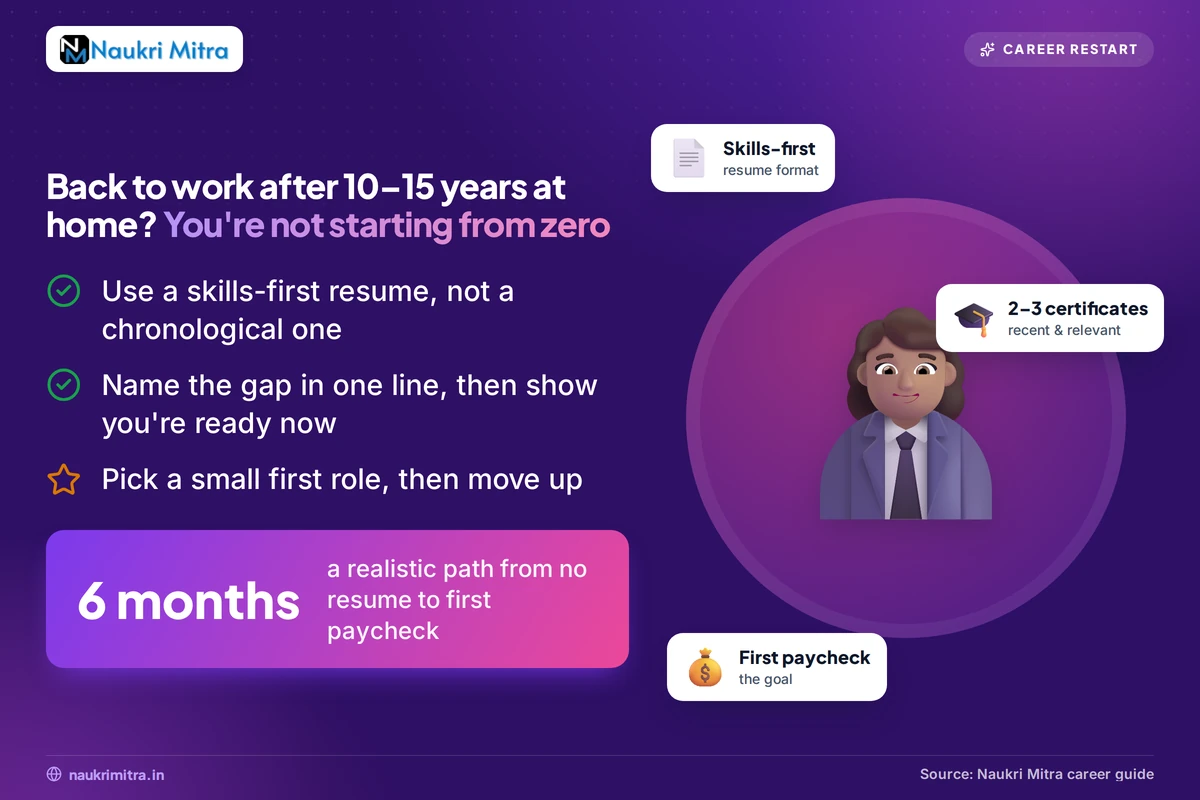
Plenty of women restarting their careers haven't just taken a break from a job, they've never had a formal job at all. If you're one of them, a traditional reverse-chronological resume with a "work experience" column will work against you. Instead, build what career coaches call a zero-experience resume: a skills-first format that leads with a summary of what you can do, followed by a "relevant experience" section that includes unpaid, informal, and community work presented with the same seriousness as a paid role. If you organised your society's festival committee, managed a household budget of a certain size, tutored neighbourhood children, or ran a small home-based tiffin service, write it exactly as you would a job: role, scope, and outcome. A housewife resume no work experience India search should still lead you to a document that proves judgement, reliability, and results, just drawn from a different kind of workplace. Whether you lead with your old degree or your newly learned skills depends on the role: for a finance or teaching job, your original qualification still carries weight; for a digital role like social media management or data entry, your recent course or certificate matters more to a recruiter than a degree from two decades ago.
Transferable Skills From Running a Household That Genuinely Belong on a Resume
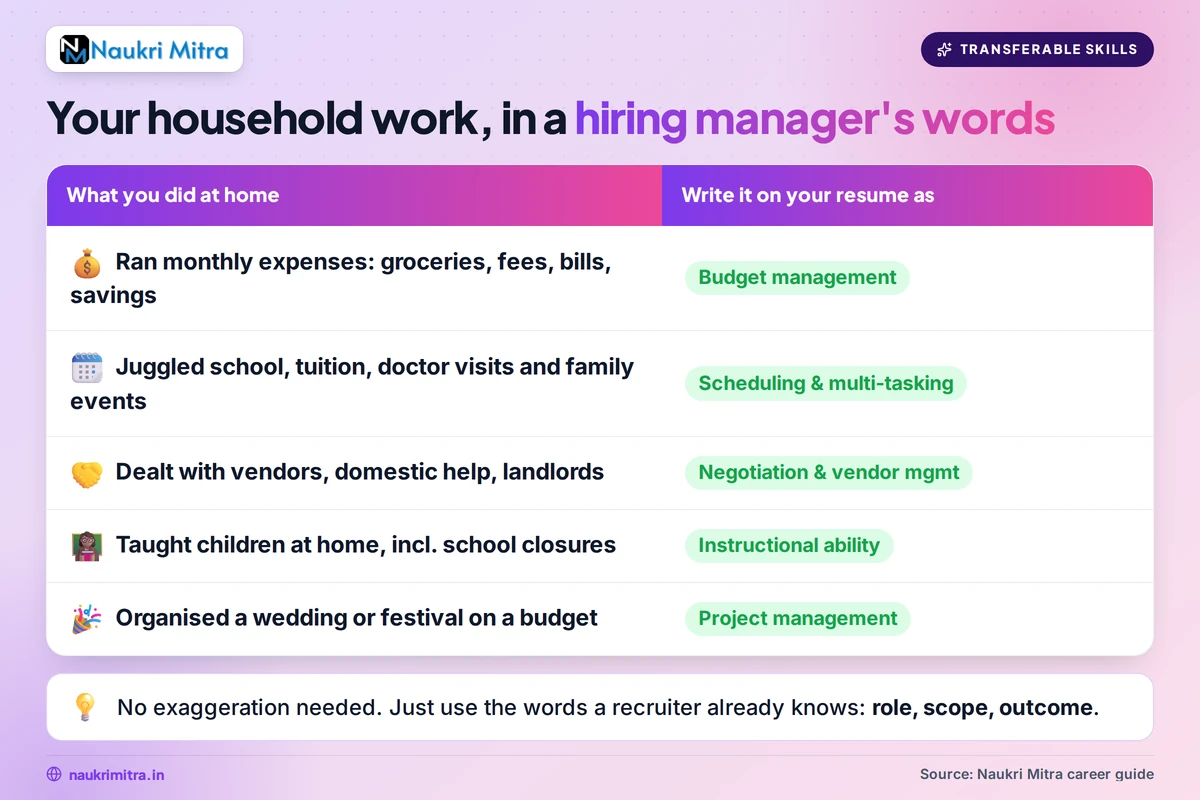
Running a home for a decade is, in practice, running a small operation with a fixed budget and zero tolerance for missed deadlines. Managing monthly expenses across groceries, school fees, utilities, and savings is budget management and financial planning. Coordinating children's school schedules, tuition, medical appointments, and family events simultaneously is multi-tasking and scheduling under pressure. Negotiating with vendors, domestic help, landlords, or relatives is negotiation and vendor management. Teaching children at home, especially during school closures, is instructional ability. Organising a wedding or a festival on a budget and a deadline is project management. None of this needs exaggeration; it needs to be named in the vocabulary a hiring manager already uses, rather than buried in domestic language that doesn't translate on paper.
Explaining a 10-15 Year Gap to an Interviewer Without Apologising For It
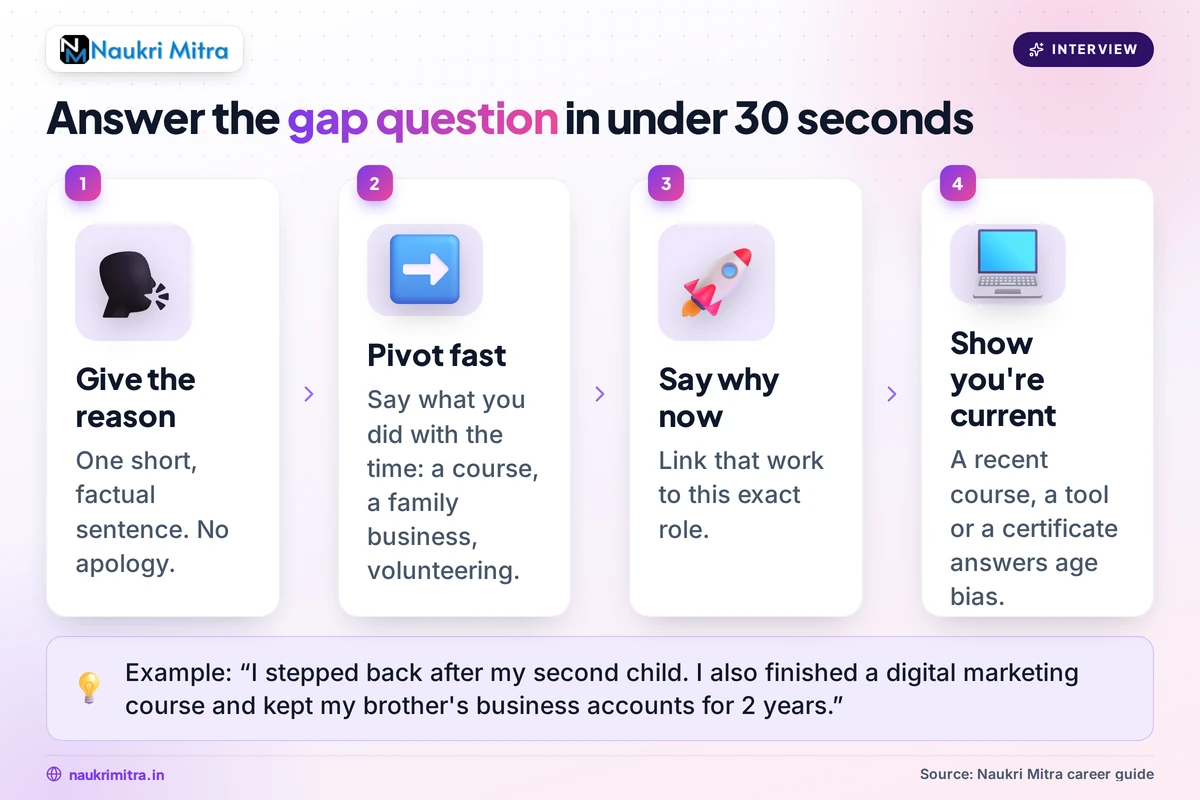
The question will come, directly or indirectly: "So tell me about this gap in your resume." The honest, confident answer is almost always more persuasive than a rehearsed excuse. State the reason briefly and factually, in one sentence, then pivot immediately to what you did with the time and why you're ready now. For example: "I stepped back after my second child was born to focus on my family. During that time I also completed a digital marketing certification and managed my brother's small business accounts for two years, which is part of why I'm applying for this role today." That's it. No extended justification, no visible discomfort. Interviewers are far more interested in your readiness and recent preparation than in why the gap happened in the first place. On age-related bias, which is real and worth naming rather than ignoring: address it proactively by demonstrating current relevance, a recently completed course, a tool you've learned, a certificate, rather than letting the interviewer draw their own conclusions about whether you've "kept up." Confidence rebuilding after years away from formal workspaces is as much a part of this process as the resume itself, and it usually comes from doing small, visible things, like one informational interview or one short course, rather than from waiting to feel ready.
Entry Points: Returnships, Trainee Programs and Government Schemes in India
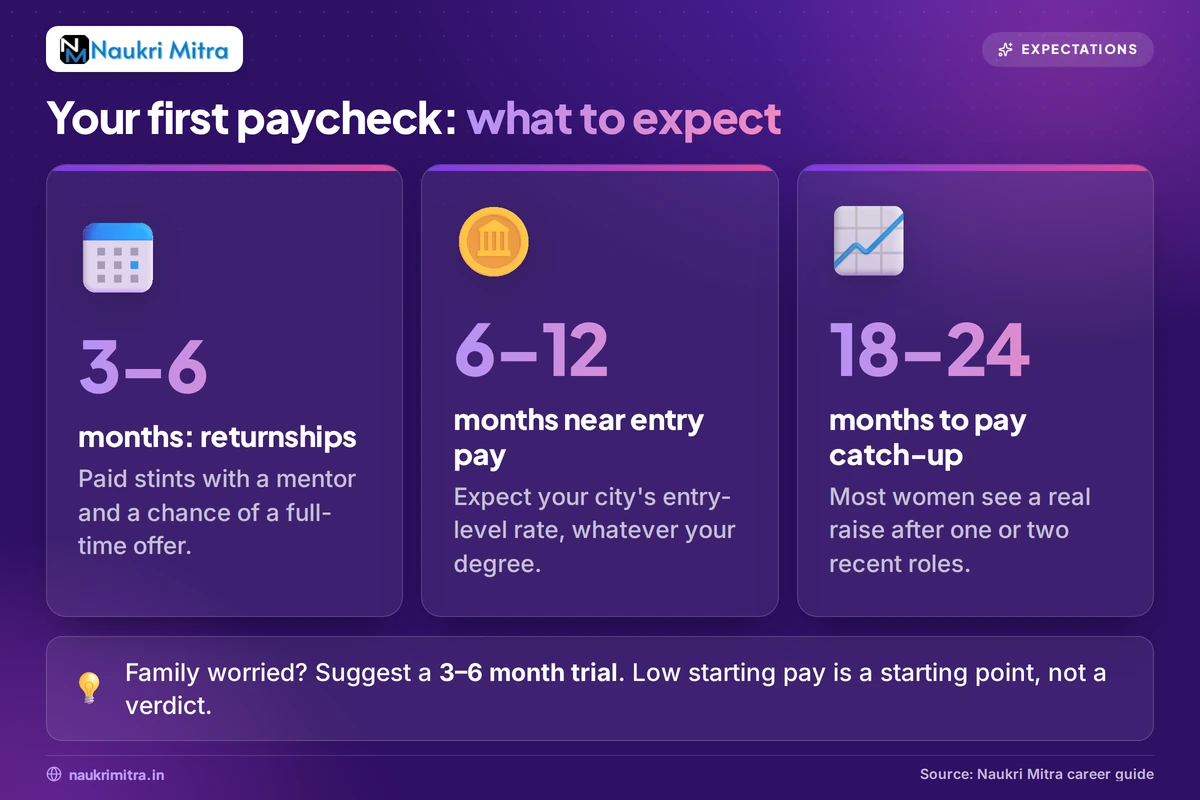
You don't need to land a full-fledged mid-career role on day one. Several structured entry points exist specifically to build a first work record after a long break. Corporate returnship programmes, often run by large IT and consulting firms, are short paid stints, typically three to six months, designed for exactly this situation: women with multi-year gaps, no recent reference, and real capability. These function as a genuine career re-entry program, pairing you with a mentor, a defined project, and a possibility of a full-time offer at the end. Separately, the Ministry of Women and Child Development runs Mahila Shakti Kendra and allied schemes aimed at skilling and employment linkage for women, including those without a formal degree; eligibility and availability vary by state, so check with your local district office for current details. Trainee and apprenticeship roles in retail, BPO, EdTech, and administrative support are also realistic first stops, since many explicitly welcome candidates without recent paid experience. You can browse current openings, including entry-level and flexible roles, through listings like this data entry position in Delhi, which is the kind of structured, low-barrier role many women use as a first step back.
Free and Low-Cost Upskilling Courses Worth Your Time at 40 and Beyond
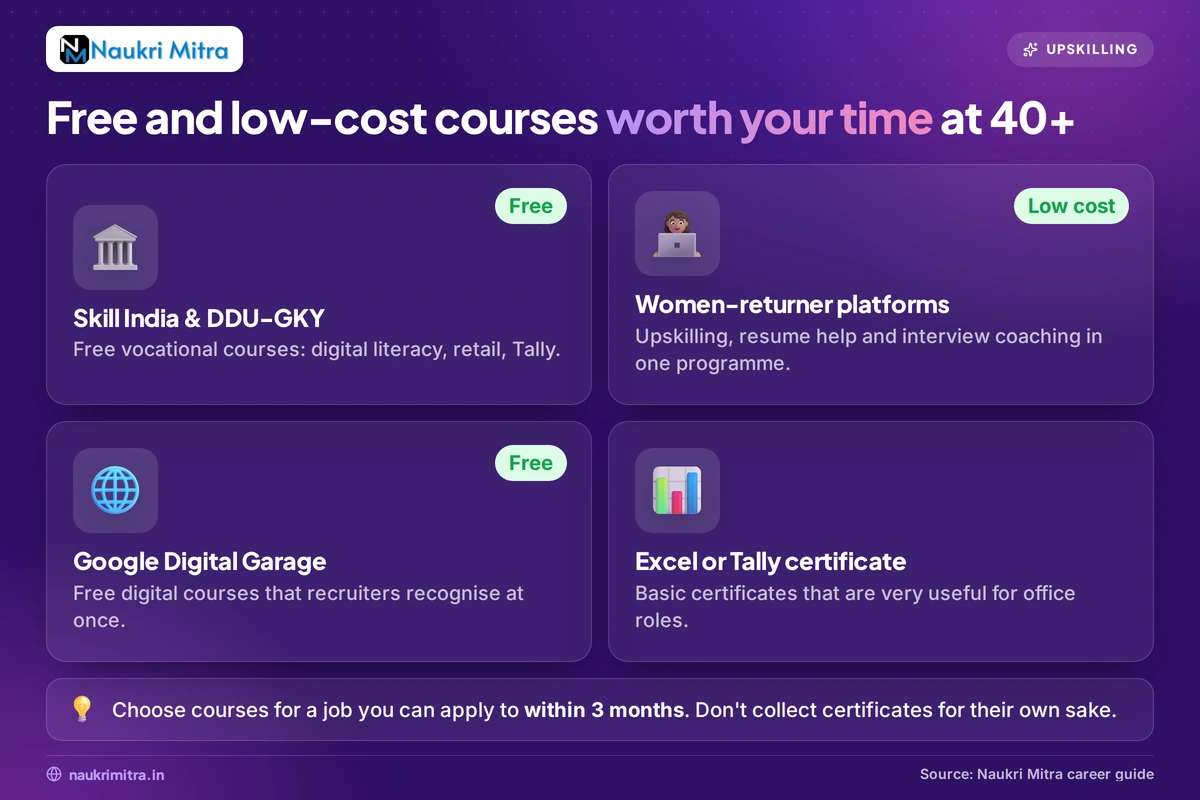
You don't need an expensive degree to become employable again; you need two or three credible, recent certifications that match the role you're targeting. Government-backed platforms like Skill India and DDU-GKY offer free vocational courses across digital literacy, retail, and tally/accounting. NGO-backed and private platforms focused specifically on women returners, such as those run by JobsForHer and similar organisations, bundle upskilling for homemakers with resume help and interview coaching in one programme, often at no or minimal cost. Google's free Digital Garage courses and basic Excel or Tally certifications remain disproportionately valuable because recruiters recognise them instantly. Pick courses that map directly to a job you can see applying for within three months, rather than collecting certificates for their own sake.
Freelancing or Part-Time Work First, or Straight Into a Full-Time Role?
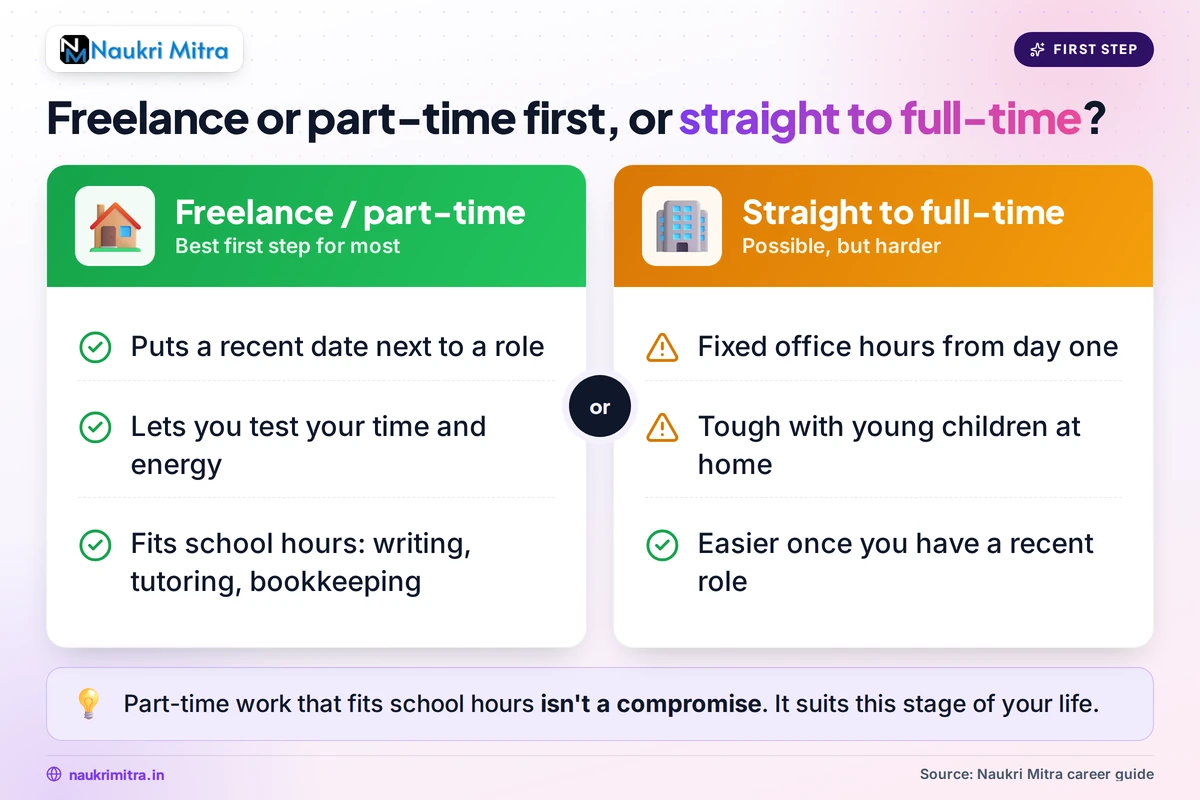
For most women managing a long gap alongside ongoing household and childcare responsibilities, freelance or part-time work is the more realistic and strategically sound first step, not a lesser option. A few months of paid freelance writing, bookkeeping, tutoring, or virtual assistant work gives you something a resume desperately needs after a long gap: a recent date next to a role. It also lets you test your bandwidth honestly before committing to fixed office hours. If your children are young or still need school-hour supervision, work-from-home and part-time roles that align with school timings are not a compromise, they're a sensible match between the job and the season of life you're in. Roles like this work-from-home content writing opportunity are a practical example of the kind of flexible first assignment that builds a current, usable line on your resume while you decide whether to move toward full-time work later.
Building a LinkedIn Profile and Online Presence When You Have No Professional History to Show
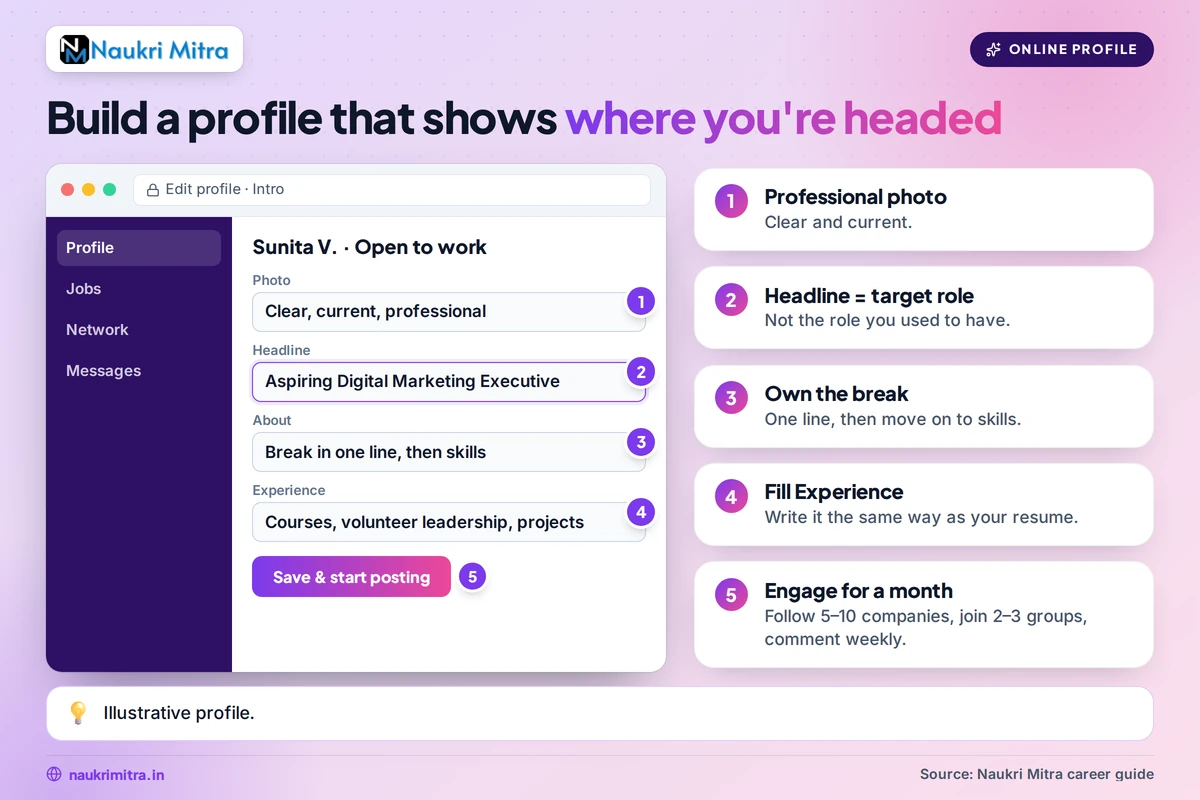
A blank LinkedIn profile signals inactivity more loudly than an honest one that shows a gap. Start with a clear, current professional photo, a headline that states what you're looking for rather than what you used to be ("Aspiring Digital Marketing Executive | Completed Google Digital Garage Certification" works better than a blank title), and a summary that owns the break in one line before moving to your skills and recent learning. Add any course certificates, volunteer leadership roles, and informal project work under "Experience," written the same way you wrote them on your resume. Follow five to ten companies and recruiters in your target field, join two or three relevant groups, and comment thoughtfully on a handful of posts each week. This single activity, consistently done for a month, does more for your visibility than a perfectly polished but silent profile.
Industries and Roles Most Open to Hiring Homemakers Restarting Their Careers
Certain sectors have genuinely adapted their hiring to welcome returners rather than merely tolerating them. EdTech and tutoring companies value subject knowledge and patience over recent corporate titles. BPO, customer support, and telecalling roles often run structured, short training programmes that assume no prior experience. Retail and e-commerce operations, especially during peak seasons, hire in volume with flexible shifts. Content writing, social media management, and basic digital marketing are increasingly remote-friendly and skills-based rather than pedigree-based, which matters enormously if you're rebuilding from home. Healthcare support roles, from clinic receptionists to community health work, also value the organisational skills a decade of household management builds. If any of these interest you, search specifically for jobs for homemakers with no experience India rather than generic listings, since the filtering does real work for you.
Handling Family Resistance and Setting a Realistic First Salary Expectation
Spousal or family resistance to a career restart is common enough that it deserves a direct, practical answer rather than being brushed aside. The most effective approach is usually a concrete conversation backed by a plan: specific hours, specific childcare arrangements if needed, and a specific, modest first goal, rather than an abstract desire to "work again." Framing the first job as a trial period of three to six months often lowers resistance considerably, since it feels reversible rather than permanent. On compensation, be realistic and firm at the same time: your first job after marriage, or after any long gap, will likely pay at or slightly below entry-level market rates in your city for the first six to twelve months, regardless of your original qualifications, because you are rebuilding a recent track record, not resuming an old salary trajectory. That is a starting point, not a verdict on your worth, and most women who stay employed see meaningful salary correction within 18-24 months once they have one or two recent roles on their resume.
Red Flags in "Homemaker-Friendly" Job Advertisements
Unfortunately, the phrase "work from home for housewives" attracts a disproportionate number of scams. Be cautious of any listing that asks for money upfront for "training kits," "registration," or "software access"; legitimate employers never charge candidates to get hired. Be wary of vague job titles with unrealistically high pay for minimal described work, requests to chat only on WhatsApp or Telegram with no company website or verifiable address, and any "data entry" or "typing" job that promises payment per click rather than a fixed stipend or hourly rate. A genuine employer will have a real company name you can search, a physical or verifiable registered address, and a job description specific enough to tell you what you'll actually be doing all day.
A Realistic Six-Month Roadmap From No Resume to First Paycheck
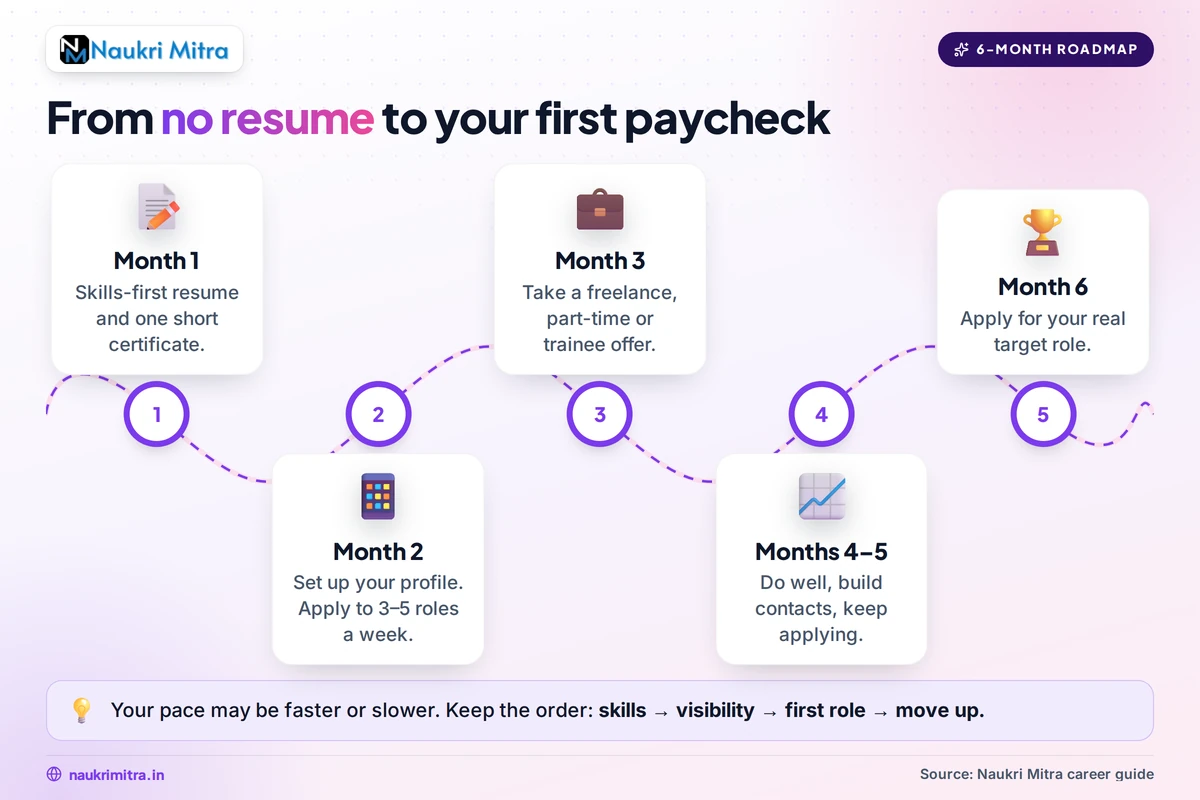
Month one: build your skills-first resume, list every transferable skill honestly, and complete one short, relevant certification. Month two: build or refresh your LinkedIn profile, start following target companies, and apply to three to five roles weekly, including returnship programmes and trainee positions. Month three: take any reasonable freelance, part-time, or trainee offer, even if it's smaller than your ideal, purely to generate a recent, current reference point. Months four and five: perform well in that role, start building a small professional network inside it, and keep applying upward toward your actual target role. Month six: use your three to five months of recent, verifiable experience to apply for the role you actually wanted from the start, now with a resume that has a current date on it. This roadmap isn't rigid, your own six-month version may move faster or slower, but the sequence, skills, visibility, a first role, then an upward move, holds for most successful career restart for women after marriage India stories. You can start the search end of this roadmap right now by exploring current openings on Naukri Mitra, which lists flexible, entry-level, and work-from-home roles suited to exactly this kind of restart.
None of this requires you to have it all figured out before you begin. Research on hiring patterns shows that resume gaps still carry real weight with recruiters, which is why strategy matters more than willpower alone. Several large Indian employers now run formal structured returnship programmes built for professionals rebuilding after a break, and India-specific comeback guides lay out exactly how to re-enter workforce after long gap India options. The paperwork, the course, and the first small role are all more within reach than they feel on the hard days.
Frequently Asked Questions
How do I write a resume if I've never had a paid job before?
Use a skills-first format instead of a chronological one. Lead with a summary of your capabilities, then list unpaid, informal, or community work using the same job-style language (role, scope, outcome) you'd use for paid work.
What transferable skills from homemaking actually count on a resume?
Budget management, scheduling and multi-tasking, vendor negotiation, event or project coordination, and informal teaching or tutoring all translate directly into recognised professional skills when named in standard business language.
How do I explain a 10-15 year employment gap in an interview?
State the reason in one factual sentence, then pivot immediately to what you did during that time and why you're prepared now. Avoid over-explaining or apologising; confidence and brevity read better than a long justification.
Are there India-specific programmes for women restarting careers without a degree?
Yes. Government schemes like Mahila Shakti Kendra, Skill India vocational courses, and NGO or private returner programmes support women with varying educational backgrounds; eligibility details vary, so confirm current criteria with the relevant local office or programme directly.
What salary should I expect in my first job after a long career break?
Expect pay near entry-level market rates for your city in the first six to twelve months, even if your original qualifications were higher, since employers are evaluating recent, demonstrated performance over past credentials.
Should I try freelancing before applying for a full-time job?
For most women balancing household responsibilities, a short period of freelance or part-time work is a strong first step. It builds a recent reference point on your resume and lets you test your schedule realistically before committing to full-time hours.
How is restarting after 10+ years different from returning from maternity leave?
A maternity return usually means going back to an existing job and manager. A long-gap restart means rebuilding your professional identity, network, and current skills from scratch, which calls for a different, more deliberate strategy.
What warning signs suggest a "homemaker-friendly" job ad might be a scam?
Any request for upfront payment for training or registration, communication only through WhatsApp with no verifiable company details, and vague roles promising unrealistically high pay for minimal work are all strong red flags to avoid.
How do I handle family resistance when I want to restart my career?
Bring a concrete plan rather than an abstract wish: specific hours, a childcare arrangement if needed, and a modest first goal framed as a three-to-six-month trial. A plan reduces resistance far more effectively than a general conversation.
Sources: Harvard Business Review – Research: Resume Gaps Still Matter; Built In – A Guide to Returnship Programs and Their Benefits; Apna – Restart Your Career After a Break: Complete Comeback Guide.
.png)
.png)
.png)
Comments
Post a Comment